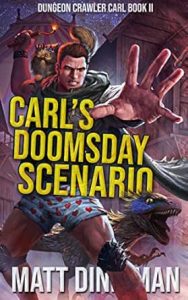
 Some Thoughts on books 2 to 5.
I really do not like giving away spoilers in the middle of a series. When a book series is out and popular, it is pretty much inevitable that to discuss them, is to give spoilers away to someone.
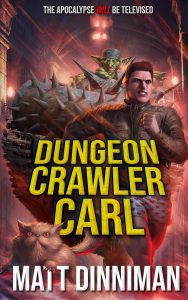
I have generally enjoyed this series. And I have enjoyed it a lot more than I thought I would. If I understand correctly, Matt Dinniman self published the first book in Sept 2020 and then the audiobook, narrated by Jeff Hays, was released about 18 months later. But somehow the 2nd to the 5th books were all released initially in print/ebook from January 2021 until February 2022. The publication pace slowed down, the 6th book released in June 2023. the 7th in Nov 2024, and the 8th in May 2026. Ace picked up the publication rights (but Dinniman kept the ebook rights) in 2024.
As a self published series, I think these are really good. But I also think the audiobook production and narration quality is part of what has made these so popular. The audiobooks are among the best I have heard.
For a fairly simple main storyline, the books have developed well. But by the time I hit the middle of book five I was getting a bit bored. This is a series where the whole premise is that the earth was captured and mostly destroyed and almost all of those who survived the initial destruction have been force to pay in a game to their death. This isn’t quite Hunger Games where the last human alive wins, but rather the humans have to complete against fantasy monsters or aliens in a world filled with Non Playable Characters (NPCs) that also get killed at a pretty high rate.